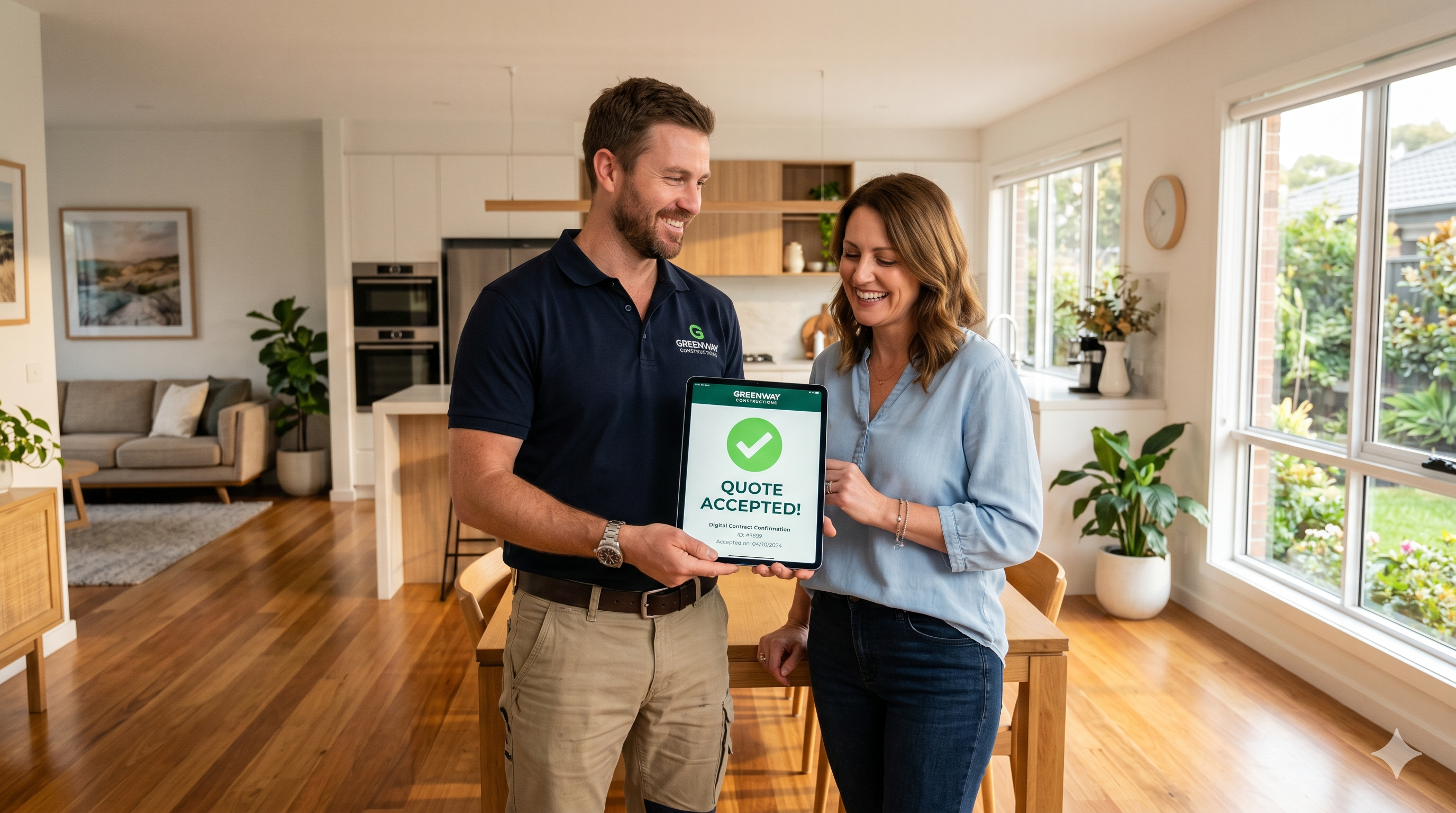
If you have ever wondered whether a customer tapping Accept on their phone actually counts as a legally binding agreement — you are not alone. Digital signatures are one of the most common concerns contractors have when moving away from paper-based quotes and contracts.
The short answer is yes — digital signatures are legally binding in most countries, including the UK, US, Australia and across the EU. But there are important details every contractor should understand. This guide covers everything you need to know.
Yes — digital signatures on contractor quotes and service agreements are legally binding in the UK under the Electronic Communications Act 2000, in the US under the ESIGN Act and UETA, and across the EU under the eIDAS regulation. A customer accepting your quote digitally carries the same legal weight as a handwritten signature.
Why Contractors Are Unsure About Digital Signatures

Most contractors grew up using paper contracts and handwritten signatures. The idea that a customer tapping a button on their phone creates the same legal agreement feels unfamiliar — and that unfamiliarity leads to hesitation.
Common concerns include whether the signature can be disputed, whether it holds up in court, and whether customers will trust the process. This guide addresses all of these concerns directly.
The Legal Framework — Country by Country
🇬🇧 United Kingdom
Electronic Communications Act 2000Digital signatures are fully legally recognised in the UK. An electronic signature is admissible as evidence in legal proceedings and carries the same weight as a handwritten signature for service agreements and contracts.
🇺🇸 United States
ESIGN Act & UETAThe Electronic Signatures in Global and National Commerce Act (ESIGN) and the Uniform Electronic Transactions Act (UETA) make electronic signatures legally valid across all US states for commercial contracts and service agreements.
🇦🇺 Australia
Electronic Transactions Act 1999Australia recognises electronic signatures as legally binding under the Electronic Transactions Act. Digital acceptance of quotes and contracts is valid and enforceable in Australian courts.
🇪🇺 European Union
eIDAS RegulationThe EU eIDAS regulation standardises electronic signatures across all member states. Simple electronic signatures — including clicking Accept on a quote — are legally valid for most commercial transactions.
What Makes a Digital Signature Valid and Enforceable
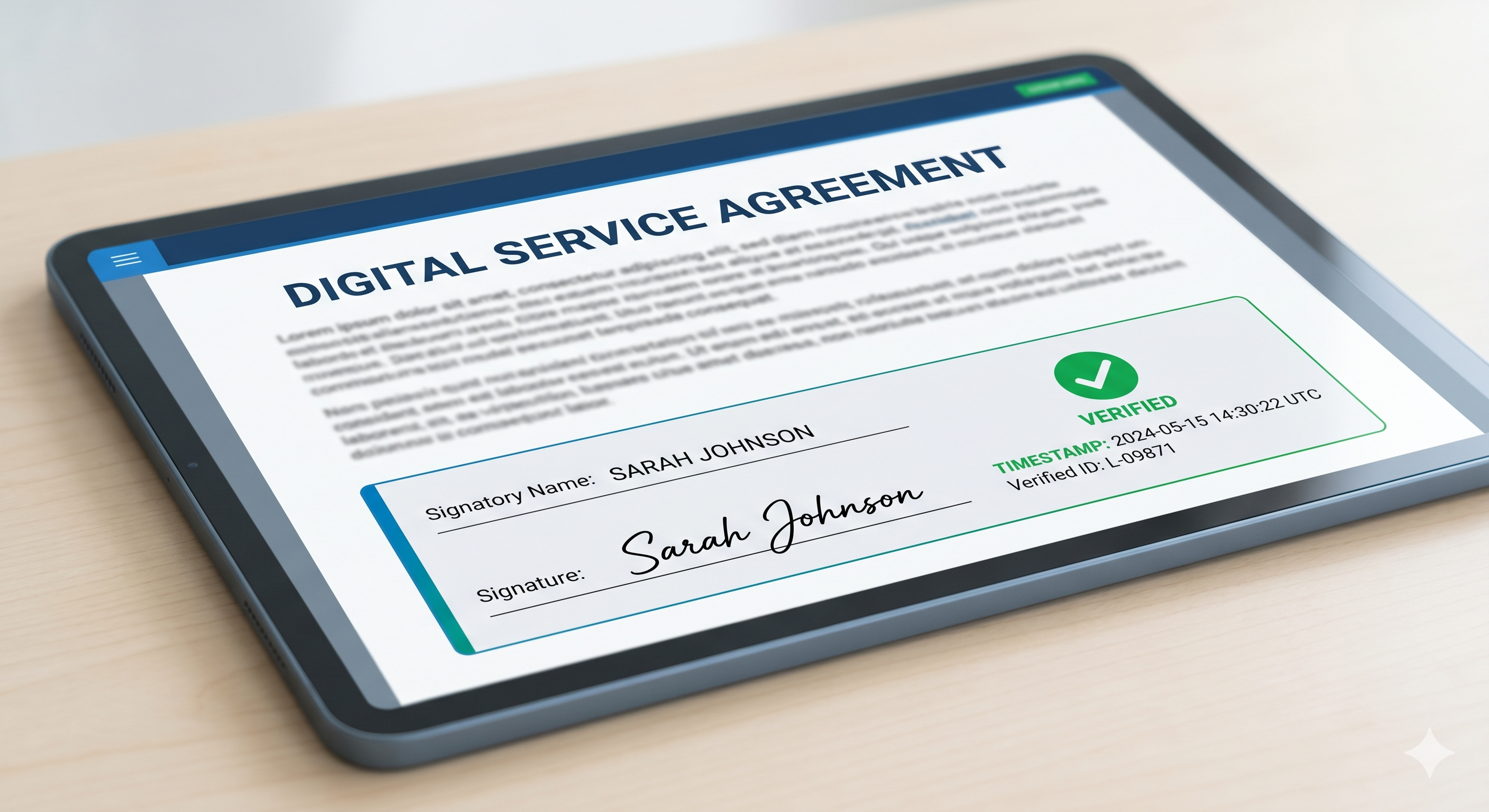
Not all digital signatures are created equal. For a digital signature to be legally enforceable, it should meet these key criteria:
Clear identification of the signatory
The signature must be linked to the person who signed it. This typically means capturing their name, email address and IP address at the time of signing.
Timestamp of when it was signed
A reliable digital signature system records the exact date and time the document was accepted. This creates an auditable trail that can be referenced in any dispute.
Tamper-evident record
Once signed, the document should be locked and any changes should be detectable. This protects both you and the customer from anyone altering the agreed terms.
Consent to use electronic signatures
The customer should be made aware they are signing electronically. Including a brief statement like 'By clicking Accept you agree to the terms of this quote' is sufficient.
A copy sent to both parties
Best practice is to send a copy of the signed document to both you and the customer immediately after signing. This creates a record for both parties.
Common Questions Contractors Ask
Q: Can a customer dispute a digital signature?
A: Yes — just as they can dispute a handwritten one. However, a digital signature with a timestamp, IP address and email trail is actually harder to dispute than a handwritten signature because the evidence is clearer and more detailed.
Q: What if the customer says they did not understand what they signed?
A: This is why your quote should clearly state what the customer is agreeing to before they sign. A simple line like 'By accepting this quote you agree to the services and pricing listed above' is sufficient protection.
Q: Does it work for large jobs?
A: Yes. Digital signatures are used for multi-million pound construction contracts and commercial property agreements. For residential trade work, they are more than sufficient.
Q: What if I need to go to small claims court?
A: A digitally signed quote with a timestamp and signatory details is strong evidence in small claims proceedings. Many contractors find it easier to prove their case with a digital record than with a paper one.
Q: Does my customer need to install anything to sign?
A: No. With SwiftQuote, customers simply tap Accept on any smartphone or tablet. No app download, no account required — the whole process takes under 30 seconds.